
Top military officials from India and Pakistan highlighted their views at the Shangri-La Dialogue in Singapore, billed as Asia's premier defence forum, amid heightened tensions between the two sides following last month's military confrontation.
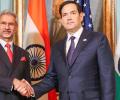
The phone conversation came amid escalating tensions between India and Pakistan over the April 22 terror attack that killed 26 civilians.

Turkiye and Azerbaijan backed Pakistan and condemned India's recent strikes on terror camps in that country and Pakistan-occupied Kashmir under Operation Sindoor.

'Fears in Washington began to intensify when it was realised that subsequent Pakistani and Indian attacks on major military facilities -- which were significant in terms of geographic scope and intensity -- could rapidly take both sides to where neither actually wanted to go.' 'The US objective was to stop the fighting as soon as possible. Everything else was secondary.'
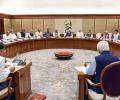
India has reached out to key global powers, including members of the UN Security Council, and apprised them about the reasons behind its military strikes on nine terror targets in Pakistan and Pakistan-occupied-Kashmir in retaliation for the Pahalgam terror attack. New Delhi also conveyed to the countries that it will retaliate if Islamabad escalates the already tense situation.
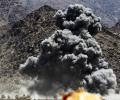
India on Monday "unequivocally" condemned Pakistani airstrikes on Afghanistan and said it is Islamabad's old practice to blame its neighbours for its internal failures. Pakistan carried out airstrikes in certain areas in Afghanistan in what it said was aimed at targeting some terrorist hideouts. "We have noted the media reports on airstrikes on Afghan civilians, including women and children, in which several precious lives have been lost. We unequivocally condemn any attack on innocent civilians," External Affairs Ministry Spokesperson Randhir Jaiswal said. "It is an old practice of Pakistan to blame its neighbours for its own internal failures. We have also noted the response of an Afghan spokesperson in this regard," he said.

The reality is that far from being friendless, India is better positioned in the world than at any point post-Cold War, asserts Shekhar Gupta.

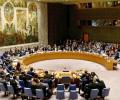
UN Secretary-General Antnio Guterres expressed concern over the heightened tensions between India and Pakistan, calling for maximum restraint and urging both countries to step back from the brink. Guterres offered his "good offices" to both governments in the service of peace and condemned the recent terror attack in Pahalgam, emphasizing the need to bring those responsible to justice. He also stressed that a military confrontation would be detrimental and could easily spin out of control. His remarks came hours before a closed consultation of the UN Security Council on the matter, requested by Pakistan. The UN Secretary-General highlighted the need for de-escalation, diplomacy, and a renewed commitment to peace.

Puri said Pakistan was a country in "terminal decline" periodically using terrorism as an instrument of state policy.
'Right now, we have no relationship with Pakistan. And the relationship with China is not great.'

Congress leader Uttam Kumar Reddy said the country wanted to know whether any aircraft were downed during the conflict, especially in the wake of the CDS' "admission".

China supplied more than $20 billion worth of arms to Pakistan. These include 20 J-10CE and JF-17 Block III fighter aircraft, Wing Loong drones, frigates, submarines, Hongqi HQ-9P surface-to-air missiles, 240 PL-15E air-to-air missiles, LY-80 air defence systems, ZDK early warning aircraft and other weapons.

According to the report, four kanals (0.5 acres) of land at H-9/2 in Islamabad was allotted to the community in 2016 for the construction of the first ever Hindu temple, cremation and community centre.
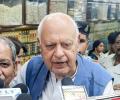
Terming Pakistan as a 'failed state', National Conference (NC) president Farooq Abdullah Thursday said relations between New Delhi and Islamabad would never improve until a peoples' government is elected in the neighbouring country.

India succeeded in busting the Pakistani narrative on Operation Sindoor, particularly among the Organisation of Islamic Conference (OIC) member nations, where Islamabad sought succour after carrying out terror activities across the border, Shiv Sena leader Shrikant Shinde said.

Days after the Pahalgam terror attack, Jammu and Kashmir authorities have deported 59 Pakistani nationals, including the mother of Shaurya Chakra awardee Constable Mudasir Ahmad Sheikh. The Pakistani nationals were living in the valley for decades and were transported to Punjab for repatriation. However, the mother of the deceased soldier was later allowed to stay back. The deportation comes after the Indian government announced a slew of measures against Pakistan in the wake of the Pahalgam attack, including the suspension of the Indus Waters Treaty and the downgrading of diplomatic relations.
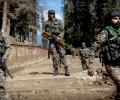
China hopes both sides will remain restrained, move toward each other, and work together to de-escalate the situation.
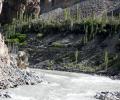
'China has thus far been cautious, emphasising its focus on development rather than weaponising water resources.'
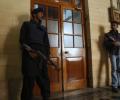
An armed guard of Qatal was also killed in the attack that took place on Saturday night.
He went on to say that even though this has not been discussed, he is going to 'increase trade substantially with both of these great Nations.'
Pakistan was waiting for an opportunity to bring the Jammu and Kashmir issue to the global agenda and resorted to the terrorism route to provoke India, observes Ambassador T P Sreenivasan.
'No military offensive by Pakistan will end the insurgency in Balochistan without simultaneous, concerted efforts toward political dialogue to de-escalate tensions.'

Main imports from the neighbouring country during April-January 2024-25 included fruits and nuts (USD 0.08 million), certain oil seeds and medicinal plants (USD 0.26 million), and organic chemicals.

US President Donald Trump has repeated his claim that Washington got involved with India and Pakistan, saying he didn't like what was happening and that he did a good job as he convinced the two countries to let's have peace and let's go and make trade deals.

The Indian military also acknowledged suffering some losses but declined to provide the details as the operations are going on.
'Whatever we do, the purpose will be to re-establish deterrence.'
'Pakistan is no longer a front-burner issue for America.'
'Every decision India makes along the LoC, it must also consider implications along the LAC.'
India on Friday called on the International Monetary Fund (IMF) to reconsider its $1 billion assistance to Pakistan, suggesting that Islamabad could use it for terror funding.
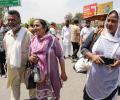
India has revoked all visas issued to Pakistani nationals effective April 27, advised Indian nationals in Pakistan to return home, and suspended visa services to Pakistani nationals. The move comes in retaliation to the Pahalgam terror attack that killed 26 people and alleged cross-border links to the attack. This escalation follows India's previous actions against Pakistan, including expelling Pakistani military attaches, suspending the Indus Water Treaty, and shutting down the Attari land-transit post.
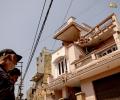
The casualties were reported hours before India and Pakistan agreed to end hostilities, which soared after the Indian Armed Forces hit terror launchpads in Pakistan and Pakistan-occupied Kashmir earlier this week in response to the Pahalgam attack.
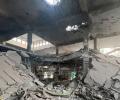
In a strong retaliation to the Pahalgam massacre, India's armed forces early Wednesday destroyed nine terror sites including that of Jaish-e-Mohammad and Lashkar-e-Taiba in Pakistan and Pakistan-occupied Kashmir (PoK) using deep strike missiles in a 25-minute-long 'measured and non-escalatory' mission.
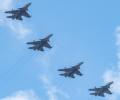
Pakistani military targets at Rafiqui, Murid, Chaklala, Rahim Yar Khan, Sukkur and Chunian were engaged using air-launched precision weapons from Indian fighter jets and the retaliation largely focused on command and control centres, radar sites and weapon storage areas, Qureshi said.
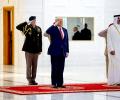
'He is intrigued by the intractability of Kashmir issue. With his interest in dealmaking and peacebrokering, he sees it as an exciting challenge to tackle.'
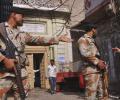
The chief priest of the biggest Hanuman temple in Pakistan, Sant Ram Nath Mishra, has said that the Pakistani Army has always supported Hindus in their struggle against extremist groups in the country. Mishra, who is currently on a visit to Hindu religious sites across India, recounted the struggle of the Panch Mukhi Hanuman Mandir in Karachi, which was encroached upon over the decades but was restored following a landmark Supreme Court ruling in 2018. He said that the Pakistani Army and government swiftly implemented the Supreme Court's decision to return the temple land, despite opposition from hardline groups. Mishra also highlighted the need for easing visa restrictions between India and Pakistan, allowing Hindus on both sides to visit religious sites in each other's countries.

'Even known names and social media handles went berserk by stating that Karachi has been attacked and an F-16 was shot down.'
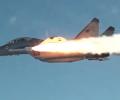
'For weeks, months and years, it would continue to be debated if India should have pushed the early advantage and decapacitated Pakistan militarily.' 'India refused to bite the provocatively proverbial bullet and escalate it into a full-fledged war,' notes N Sathiya Moorthy.
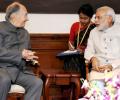
Prince Karim Al-Hussaini, Aga Khan IV, the 49th hereditary Imam of the Shia Ismaili Muslims, passed away in Lisbon at the age of 88 on Tuesday, February 4, 2025.
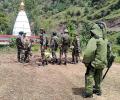
'Unfortunately, India and Pakistan could learn a 'lesson' from this conflict that will make them more likely to use these weapons against each other in the future.' 'Rounds of missile and drone attacks could be more routine features of their hostility, just like artillery fire has become a familiar fact of life along the Line of Control.'
It is important for India to pay close attention to both the tone and substance of authoritative remarks coming out of Pakistan, explains former foreign secretary Shyam Saran.
